Sunday, March 1, 2015

Nursing Diagnoses

Risk for injury

Risk for injury is an important nursing diagnosis to make especially if the patient is currently experiencing psychosis. Auditory and visual hallucinations and impaired judgment can cause a patient to react in a way they normally would not and cause injury. It is critical for the nurse to create as safe an environment as possible to decrease the risk of the patient getting hurt. 

Disturbed thought processes

As I have explained throughout this blog, schizophrenia can create changes in the way a person thinks and rationalizes. Add in hallucinations and it can be extremely difficult to rationalize even the simplest of tasks. Using short, simple sentences and helping the patient work through a situation can help the patient improve his/her thought processes. It is always important to recognize that the patient is experiencing a change in thought processing and to cater your communication to the patient's current level of understanding.

Social Isolation

Social isolation can be very common in schizophrenic patients. Auditory hallucinations may be telling the individual to stay away from other people or the person may be feeling stigmatized due to having schizophrenia. Social isolation is not the way to rehabilitation and recovery for those with schizophrenia. In an inpatient setting the patient needs to be out in the milieu, attending groups, and eating meals in the dining room. In an outpatient setting a patient who missed an appointment may need to be called or checked on to make sure he/she is not staying isolated within his/her own home. 

Disturbed sensory perception

A patient currently experiencing psychosis will have some form of disturbed sensory perception whether it is auditory, visual, or kinesthetic. The nurse should acknowledge that he/she is hearing that the patient is currently experiencing hallucinations and that they can be scary, but that the nurse is not seeing or hearing the same things. It's important to acknowledge what the patient is experiencing, but also letting the patient know that the hallucinations are not reality.

Caregiver role strain

Parents, siblings, friends, or spouses may feel upset and hopeless when it comes to the patient's diagnosis and recovery. Often caregivers may think the recovery will be much quicker than it actually is for the patient. Patient and family education on schizophrenia and giving the caregiver a realistic timeline of the patient's recovery can help alleviate some of this strain and stress. 


The following are websites that can be of help for those living with schizophrenia and for those who know people with the disease:

Nursing Care

Acute and crisis phase

For a patient who is actively psychotic, whether it be the first psychotic break or a relapse, the most important goal for the nurse is to keep the patient safe on the inpatient unit, while helping him/her become stable. It is important to remember that while a patient can remember what happened during psychosis after psychiatric stability has been reached, the patient is not his/her normal self, has very impaired judgment, and often can harm his/herself due to responses to hallucinations.1 Communicating with a psychotic patient can be difficult so it is important to not speak very complexly, but in short, simple sentences that are easier for the patient to understand among the hallucinations.

The following chart, adapted from table 20-4 of Stuart's book, lays out the various nursing interventions based on a given symptom:1 

Symptom
Nursing Interventions
Difficulty with perception and interpretation of sensory stimuli
Review the perceived situations with the patient.
Discuss basic thought processes in interpreting events.
Help patient orient self to reality.
Reinforce positive and productive processes for handling the event.
Slowed information processing
Allow patient plenty of time to process and respond to information or questions asked.
Minimize patient’s anxiety to facilitate an environment for information processing.
Be clear and simple when communicating with the patient.
Inappropriate social behaviors
Ask patient about behaviors and identify his/her thought processes leading to the behavior.
Help correct inaccurate perceptions.
Teach appropriate social skills and help identify undesirable outcomes of certain behaviors.
Difficulty with decision making
Help patient determine his/her desired outcome and prioritize goals.
Help establish a time line for each goal to be achieved.
Help patient with small, concrete steps towards achieving goals.
Concrete thinking
Understand the patient sees every problem as only having one solution.
Teach patient to look at and think about alternative solutions, or create alternative solutions for him/her.
Forced isolation because of stigma
Maximize the patient’s understanding of the illness.
Identify comments that are difficult to handle and teach ways to handle the stigma and rude comments.
Develop concrete, humorous comebacks.
Role play various situations with the nurse as the patient

Maintenance phase

The maintenance phase of schizophrenia comes after the individual has been stabilized and is ready to be discharged. The person may receive home health visits or may have to go to an outpatient clinic to continue recovery and improvement. It is during this phase that nurses need to help the patient identify early symptoms of relapse and the symptom triggers.1 The better the patient understand his/her own pathophysiology, the more successful the prevention of relapse will be. 

The Schizophrenia Patient Outcomes Research Team (PORT) gathers information to improve the long-term treatment of schizophrenia and even has recommendations for specific drugs and administration routes (by mouth, intramuscular injection, etc).2 It is a good reference for those providing care to a patient in the maintenance phase of schizophrenia.

For patients, families, and friends a great resource is www.sardaa.org. This is the website for Schizophrenia and Related Disorders Alliance of America. It is an organization founded in 2008 and is geared towards helping those living with schizophrenia and their support systems.


References:

1: Stuart, G. (2013). Chapter 20: Neurobiological Responses and Schizophrenia and Psychotic Disorders. In Principles and practice of psychiatric nursing (10th ed., pp. 549-555). Maryland Heights, Mo.: Elsevier Saunders.

2: Kreyenbuhl, J., Buchanan, R. W., Dickerson, F. B., & Dixon, L. B. (2010). The schizophrenia Patient Outcomes Research Team (PORT): Updated treatment recommendations 2009. Schizophrenia Bulletin36(1), 94-103. doi:10.1093/schbul/sbp130

Thursday, February 12, 2015

Treatment

Since the exact pathophysiology of schizophrenia is still not understood, the treatment options for those living with schizophrenia focus on the symptoms of the illness, mainly hallucinations. Antipsychotic medications are the first choice for helping people with schizophrenia deal with their hallucinations. The World Federation of Societies of Biological Psychiatry (WFSBP) has done extensive research on long-term treatments for those living with schizophrenia and has come up with a set of guidelines for treating this illness. The goals for "long-term treatment include maintenance therapy to stabilise [sic] remission, prevent relapse, and provide symptom suppression or even continued symptom improvement."1 Treating the symptoms of schizophrenia is an involved process between the individual and his/her provider. This process includes assessing side effects, effectiveness of the current dose of medication, and the risk of relapse or a relapse if one has occurred.1 I will not go into all the specifics included in long-term treatment of schizophrenia, but if you are interested I strongly suggest reading the article published by the WFSBP, which is included in the reference list below.

Typical Antipsychotics

Antipsychotics can be extremely effective at eliminating the psychotic symptoms of schizophrenia and can give people the opportunity to live a normal life, even with this illness. The first wave of antipsychotics came about in the 1950s, and these include common medications like haloperidol (Haldol), chlorpromazine (Thorazine) and fluphenazine (Prolixin).2 In general this class of antipsychotics are dopamine antagonists. What this means is that the drug will bind to postsynaptic receptor sites prohibiting dopamine from binding to these sites.3 If you remember in the pathophysiology post I explained that one problem people with schizophrenia have is too much dopamine in their brains. Too much dopamine is what causes psychosis. By inhibiting dopamine from binding to receptors, psychotic symptoms are then decreased.

As with any medication, antipsychotics have side effects, which can lead to patient nonadherence if severe enough. Some of the more serious side effects associated with typical antipsychotics are sedation, orthostatic hypotension (feeling dizzy or lightheaded when going from laying/sitting to standing), dry mouth, blurred vision, and extrapyramidal symptoms (EPS).3 EPS includes tremors and other uncontrollable movements, especially of the face, which is known as tardive dyskinesia.

Atypical Antipsychotics

The second generation of antipsychotics was developed during the 1990s and includes drugs such as olanzapine (Zyprexa), aripiprazole (Abilify), and risperidone (Risperdal).2 These medications are both dopamine and serotonin antagonists, and, unlike the typical antipsychotics, these not only help eliminate psychotic symptoms, they also help with the negative symptoms of schizophrenia.3

As far as effectiveness of long-term treatment of schizophrenia, there is not a marked difference between the typical and atypical antipsychotics.1 The differences come in the price tag, atypicals are much more expensive, and the side effects. The atypical antipsychotics have fewer EPS, but can still cause sedation. However, the major disadvantage of this class of drugs is they can cause what is called metabolic syndrome. Metabolic syndrome is uncontrollable weight gain and can lead to diabetes, dyslipidemia (high cholesterol), and even heart problems.3

As with any disease or illness the pros and cons of various medications need to be taken into account when starting medications for treating the symptoms of schizophrenia. An open dialogue needs to be maintained with the provider so he/she is aware of positive or negative changes the patient is experiencing. This is very crucial for long-term treatment of this illness.

If you are interested in further reading on schizophrenia, I suggest this article from The American Scholar titled "Living with Voices" found at this link: https://theamericanscholar.org/living-with-voices/#.VN0ZK-bF91Y


References:

1: Hasan, A., Falkai, P., Wobrock, T., Lieberman, J., Glenthoj, B., Gattaz, W. F., & ... Möller, H. (2013). World Federation of Societies of Biological Psychiatry (WFSBP) guidelines for biological treatment of schizophrenia, Part 2: Update 2012 on the long-term treatment of schizophrenia and management of antipsychotic-induced side effects. The World Journal Of Biological Psychiatry14(1), 2-44. doi:10.3109/15622975.2012.739708

2: Schizophrenia. (n.d.). Retrieved February 11, 2015, from http://www.nimh.nih.gov/health/publications/schizophrenia/index.shtml#pub7

3: Stuart, G. (2013). Chapter 20: Neurobiological Responses and Schizophrenia and Psychotic Disorders. In Principles and practice of psychiatric nursing (10th ed., pp. 549-555). Maryland Heights, Mo.: Elsevier Saunders.

Saturday, February 7, 2015

Symptoms

Last post I discussed the diagnostic criteria that a person must meet to have a diagnosis of schizophrenia. Criterion A in the DSM-5 includes five types of symptoms people living with schizophrenia can experience for extended periods of time.1 I am going to go through all of these groups of symptoms and better explain what each means.

Delusions:
A delusion is defined as a "personal belief based on an incorrect inference of external reality."2 A person who is delusional may be extremely paranoid, may think that he/she is involved in some complex scheme, or may think that he/she is a god. Delusions occur when the brain cannot properly process what a person is actually experiencing, thus leading the person to form misconceptions about what is happening, or what could happen, in his/her life.

Hallucinations:
Hallucinations can take on many different forms. In general a hallucination is a false perception that has not truly happened, but that the person actually experiences as being real. Auditory hallucinations generally take the form of the person hearing voices and can even involve multiple voices talking about the person experiencing the hallucination. Command auditory hallucinations are when voices tell a person to do something that would bring about harm to his/herself or to others. Visual hallucinations can take many forms from just flashing lights to complex scenes that may be enjoyable or may be extremely terrifying. Olfactory and gustatory hallucinations are when a person either tastes or smells something that is not really there. These are not common with schizophrenia and normally indicate the person has a brain tumor or has had a stroke. Tactile hallucinations are pain or discomfort perceived by a person without any external stimuli causing the sensation. Cenesthetic hallucinations are when someone claims to actually feel bodily functions like blood pumping through the body or urine forming . Finally, kinesthetic hallucinations cause a person to feel like his/her body is moving when in reality it is not.

Disorganized Speech:
People with schizophrenia who are actively experiencing psychotic symptoms will have difficulty forming coherent thoughts and difficulty speaking. They may be speaking what to us seems like nonsense, they may be speaking very quickly and in a pressured way, and they may make loose associations causing them to change the conversation rapidly and often.

Grossly Disorganized or Catatonic Behavior:
A person may begin to lose his/her ability to do activities that he/she was able to do before. This maladaptive behavior can include a decline in the person's personal relationships and/or job performance and a deterioration in personal appearance and the loss of ability to perform daily hygiene, which is usually the first observable symptom and a warning sign to family and friends. Catatonia is "a stuporous state in which the patient may require complete physical nursing care, similar to that for a comatose patient, sometimes with unpredictable outbursts of aggressive behavior or strange posturing."2

Negative Symptoms:
Negative symptoms refers to any symptoms of diminished normal behaviors. An example of a negative symptom is having a flat affect. This means the person is not showing any signs of emotions. However, it does not mean the person is not experiencing any emotions, he/she is just unable to express any emotions. Other negative symptoms include apathy, without any interest or concern, and anhedonia, a decreased ability to experience joy or pleasure.

The following video is a great summary of what I have discussed here and in the last post on diagnosing schizophrenia.
3


References:

1: Tandon, R., Gaebel, W., Barch, D. M., Bustillo, J., Gur, R. E., Heckers, S., & ... Carpenter, W. (2013). Definition and description of schizophrenia in the DSM-5. Schizophrenia Research150(1), 3-10. doi:10.1016/j.schres.2013.05.028

2: Stuart, G. (2013). Chapter 20: Neurobiological Responses and Schizophrenia and Psychotic Disorders. In Principles and practice of psychiatric nursing (10th ed., pp. 344-375). Maryland Heights, Mo.: Elsevier Saunders.

3: Howcast. (2013, August 19). Symptoms & Criteria for Diagnosis | Schizophrenia [Video file]. Retrieved from https://www.youtube.com/watch?v=MfFQvKQUFiY

Monday, February 2, 2015

Diagnosis

The Diagnostic and Statistical Manual

When it comes to diagnosing any disease within the realm of psychiatry, health care providers in the United States use the Diagnostic and Statistical Manual of Mental Disorders (DSM). The DSM is "the standard classification of mental disorders [...] and contains a listing of diagnostic criteria for every psychiatric disorder recognized by the U.S. healthcare system."1 Over the years of psychiatric medicine the DSM has been revised and republished several times by the American Psychiatric Association (APA). The most recent publication, the DSM-5, was released in May of 2013, after over a decade of revisions and meetings. However, with the arrival of the newest edition came a lot of worry about what it would mean for those who may have been misdiagnosed according to the DSM-5. Many worry that it will only make the problems we have here in the USA surrounding mental health worse. Either way, the DSM-5 is here to stay, and the group in the video below have come up with a fun jingle about the APA's newest diagnostic criteria manual.
2

Diagnostic Criteria for Schizophrenia

Schizophrenia has a variety of different symptoms that when discovered in a person come together to form the diagnosis of this illness (next week I will be discussing the symptoms of schizophrenia in depth, so here I will only mention which symptoms a person diagnosed with the disease will experience).

Tandon, et al. published an article in 2014 comparing the DSM-4 to the DSM-5. The article does an excellent job highlighting and explaining the major differences between the two diagnostic manuals when it comes specifically to the diagnostic criteria for schizophrenia. Here are the six criteria that a person must meet in order to be diagnosed with schizophrenia: 3

Criterion A: Characteristic Symptoms
The person must have two or more of these symptoms for a significant amount of time, and one of the symptoms must be one of the first three listed:
  • delusions
  • hallucinations
  • disorganized speech
  • grossly disorganized or catatonic behavior
  • negative symptoms
Criterion B: Social/Occupational Dysfunction
The person must experience some form of dysfunction whether it be with self care, work, personal relationships, etc that is clearly worse than prior to onset.

Criterion C: Duration of Six Months
The person must have ongoing symptoms for at least six months with at least one month with active symptoms from criterion A.

Criterion D: Schizoaffective and Mood Disorder Exclusion
Schizoaffective disorder must have been ruled out along with any mood disorders (major depressive disorder, bipolar disorder) with psychotic features.

Criterion E: Substance/General Mood Condition Exclusion
The illness cannot have been caused by any substance use, such as amphetamines, or by any medical condition, such as a brain tumor.

Criterion F: Relationship to Global Developmental Delay or Autism Spectrum Disorder
If a person has a childhood diagnoses of Autism Spectrum Disorder, or any other childhood communication disorder, an additional diagnosis of schizophrenia will only occur if delusions and hallucinations are present for at least a month.


References:

1: American Psychiatric Association DSM-5 Development. (n.d.). Retrieved January 31, 2015, from http://www.dsm5.org/about/Pages/Default.aspx

2: Neipsychopharm. (2014, March 18). DSM-5! [Video file]. Retrieved from https://www.youtube.com/watch?v=0rm5p3DTyE8

3: Tandon, R., Gaebel, W., Barch, D. M., Bustillo, J., Gur, R. E., Heckers, S., & ... Carpenter, W. (2013). Definition and description of schizophrenia in the DSM-5. Schizophrenia Research150(1), 3-10. doi:10.1016/j.schres.2013.05.028

Sunday, January 25, 2015

Pathophysiology

Genetics, the environment, and drugs...oh my!

As was previously discussed last week, there are several factors that when converged in the perfect storm can result in a diagnosis of schizophrenia. Genetics plays a crucial role, and even though it is not fully understood which genes are responsible for schizophrenia, we know having a direct relative with schizophrenia is the biggest risk factor for someone becoming diagnosed with the disease. We know the environment of the pregnant mother can play a role on the fetus developing schizophrenia later on, and we also know drugs, such as amphetamines, cocaine, and marijuana, can also induce psychosis.1 But what is happening in the brain that causes this psychosis? What makes the brain of a person with schizophrenia different from the brain of someone without the disease? As with the genes responsible for schizophrenia, there is a lot of research currently going on to answer these questions.

What research has found is that people with schizophrenia tend to have problems with certain neurotransmitters. This research has led to the dysregulation hypothesis, which says that the psychotic symptoms involved with schizophrenia are the result of impairment or malfunction of neurotransmitters.2 One of these neurotransmitters is dopamine. Dopamine is a neurohormone, or neurotransmitter, that is often referred to in layman's terms as a "feel good" hormone. When there is too much dopamine in the brain, a person will often suffer from psychotic symptoms such as hallucinations or delusions. This is why certain illicit drugs induce psychosis, because they increase the amount of dopamine in the brain in the extracellular space. 
Another neurotransmitter that when malfunctioning can lead to schizophrenia is glutamate and its reciprocal NMDA receptor.3 It is hypothesized that the impaired binding of glutamate to the NMDA receptor can then lead to the increased levels of dopamine later on.4 This is better explained by Dr. Shitij Kapur from King's College in London: 


References:


1: NAMI - The National Alliance on Mental Illness. (n.d.). Retrieved January 23, 2015, from http://www.nami.org/Content/NavigationMenu/Mental_Illnesses/Schizophrenia9/Causes.htm

2: Stuart, G. (2013). Chapter 20: Neurobiological Responses and Schizophrenia and Psychotic Disorders. In Principles and practice of psychiatric nursing (10th ed., pp. 344-375). Maryland Heights, Mo.: Elsevier Saunders.

3: de Bartolomeis, A., Iasevoli, F., Tomasetti, C., & Buonaguro, E. F. (2014). Micrornas in schizophrenia: Implications for synaptic plasticity and dopamine–glutamate interaction at the postsynaptic density. New avenues for antipsychotic treatment under a theranostic perspective. Molecular Neurobiology, doi:10.1007/s12035-014-8962-8


4/Movie: Roche. (2013, October 2). The Biology Behind Schizophrenia [Video file]. Retrieved from https://www.youtube.com/watch?v=V1kSIfxBVfU

Saturday, January 17, 2015

Epidemiology

Who is affected?

When studying the epidemiology of a disease, many factors are weighed to determine what kinds of people have this disease, where they live, what lifestyle habits they have, etc. With schizophrenia a lot of these risk factors are still being researched, and it is still not one hundred percent clear as to what specific kind of person is most likely to be diagnosed with schizophrenia.

Important terms to know - and understand the difference between the two - when discussing epidemiology are incidence and prevalence. Incidence, by research standards, is defined as the rate of new cases for a disease within a given time per a given amount of the population. Because schizophrenia is not as common as other certain medical problems, the incidence of schizophrenia tends to be reported per 100,000 or 10,000 people. Prevalence, on the other hand, is defined as the number of people currently living with the disease in a given population.1

What the research is showing and what we are learning is that schizophrenia is a combination of both genetic and environmental factors that contribute to a person having this disease. Based on what is known, "the most significant risk factor for developing schizophrenia is having a first-degree relative with schizophrenia."2 Currently there are many active research studies working to identify which genes contribute to a person having schizophrenia, and the website www.szgene.org is a database specifically for all of the research being done around this. It is a great resource for past and current work and is constantly updated with the latest findings on the genetic components of schizophrenia. Along with having a "first-degree relative" who has/had schizophrenia, it has been found that the majority of people diagnosed with schizophrenia are male;3 there is a risk between an older paternal age at conception and a child's increased risk for having schizophrenia;4 and there is even an increased risk based on where you live in the world.3

Where are people affected?3

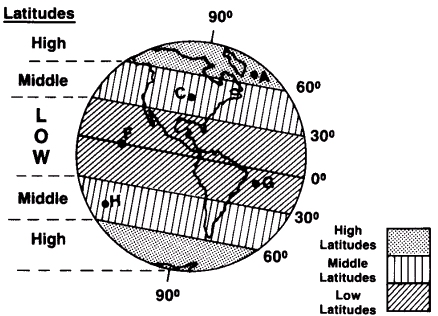
So where in the world are there more people in a population living with schizophrenia? The answer comes from a research team who has written multiple papers on the different environmental risk factors for schizophrenia. The study took data from 162 research projects and looked at the incidence and prevalence of schizophrenia within low (equator to 30 degrees), medium (30 to 60 degrees), and high (above 60 degrees) latitudes. While there was little variation found between these latitude ranges for females, there was a significant increase of incidence and prevalence of schizophrenia for males the higher the latitude.

There have been studies that show people with schizophrenia tend to be born during the winter/spring months. There are also theories that say there could be a correlation between the amount of vitamin D a pregnant women has during the pregnancy of a fetus who then goes on to develop schizophrenia. This study on latitude supports both. The fact that more males have schizophrenia at higher latitudes could be indicative of lower levels of vitamin D for pregnant woman where there is less direct sunlight, especially during the winter months when the days are shorter.

So much research has been done, but there is still so much more research left to do!


References:

1: Incidence and prevalence. (n.d.). Retrieved January 15, 2015, from http://www.advancedrenaleducation.com/generaltopics/basicstatistics/incidenceandprevalence/tabid/520/default.aspx


2: Stuart, G. (2013). Chapter 20: Neurobiological Responses and Schizophrenia and Psychotic Disorders. In Principles and practice of psychiatric nursing (10th ed., pp. 344-375). Maryland Heights, Mo.: Elsevier Saunders.

3: Saha, S., Chant, D. C., Welham, J. L., & McGrath, J. J. (2006). The incidence and prevalence of schizophrenia varies with latitude. Acta Psychiatrica Scandinavica,114(1), 36-39. doi:10.1111/j.1600-0447.2005.00742.x


4: Sørensen, H. J., Pedersen, C. B., Nordentoft, M., Mortensen, P. B., Ehrenstein, V., & Petersen, L. (2014). Effects of paternal age and offspring cognitive ability in early adulthood on the risk of schizophrenia and related disorders. Schizophrenia Research160(1-3), 131-135. doi:10.1016/j.schres.2014.09.035

Photo: Latitudes. (n.d.). Retrieved January 15, 2015, from http://alexmorgan.com/lats.jpg

Saturday, January 10, 2015

Definition

Cultural Stigmas

When you think of schizophrenia, what comes to mind? That "crazy" person sitting by his/herself on the bus mumbling to no one? Russel Crowe cast as John Nash in A Beautiful Mind? The former Arkham patient Harvey Dent antagonizes for information about the Joker in The Dark Knight? Schizophrenia, and mental illnesses as a whole, have a huge stigma attached to them in our society. People often use the word "crazy" to describe anyone acting out of our cultural norms such as not making eye contact, invading another's "personal space," or having a conversation with some one or some voice that you and I cannot see or hear. The reality is that millions of people around the world suffer from schizophrenia, and other mental illnesses, and for every person it is a learning process of how to deal with and manage symptoms, medication side effects, and psychotic episodes. Unfortunately many do not have the support or ability to access resources for help and are helplessly living in an altered reality seeking quick fixes to handle symptoms such as illicit drugs or alcohol. 

I would like to help relieve schizophrenia, and all mental illnesses, of this stigma. I would like to help others realize that every "crazy" person is his/her own person with an individual story and a difficult illness that he/she has to deal with on a daily basis.

What is schizophrenia?1

The word "schizophrenia" comes from the Greek words schizein (to split) and phren (mind). This is extremely misleading and would cause a person to believe that someone with the illness has a split personality. Schizophrenia is DIFFERENT from multiple personality disorder.* The illness was named as such with the idea that a person experiencing a psychotic episode has a "split" between cognitive and emotional perception.

Schizophrenia falls under the category of psychosis. Simply put, psychosis is when a person experiences an altered sense of reality that others around them do not experience. During a psychotic episode, this person will not realize that those around him/her are not seeing or hearing what he/she is experiencing. A major characteristic of schizophrenia is concrete thinking as opposed to abstract thinking, and it may be difficult for a person suffering from psychotic symptoms to multitask or follow instructions by their intended meaning. Other symptoms of schizophrenia are broken down into two categories, positive and negative, based on how they affect certain characteristics of the person's actions, behavior, and thought processes (symptoms will be discussed in depth later).

I believe that it is extremely important to remember that with schizophrenia, as with all mental illnesses, this is a pathological condition of the human body just as are congestive heart failure, arthritis, and kidney stones. As stated by Gail W. Stuart:

Schizophrenia is a neurodevelopmental brain disorder. No one thing causes schizophrenia. It is the end result of a complex interaction among thousands of genes and many environmental risk factors [...] a complex neurobiological disorder of brain neurotransmitter circuits, neuroanatomical deficits, neuroelectrical abnormalities, and neurocirculatory dysregulation (355).


References:
1: Stuart, G. (2013). Chapter 20: Neurobiological Responses and Schizophrenia and Psychotic Disorders. In Principles and practice of psychiatric nursing (10th ed., pp. 344-375). Maryland Heights, Mo.: Elsevier Saunders.

*Multiple personality disorder is a dissociative disorder where various, distinct personalities occur within one person