Who is affected?
When studying the epidemiology of a disease, many factors are weighed to determine what kinds of people have this disease, where they live, what lifestyle habits they have, etc. With schizophrenia a lot of these risk factors are still being researched, and it is still not one hundred percent clear as to what specific kind of person is most likely to be diagnosed with schizophrenia.
Important terms to know - and understand the difference between the two - when discussing epidemiology are incidence and prevalence. Incidence, by research standards, is defined as the rate of new cases for a disease within a given time per a given amount of the population. Because schizophrenia is not as common as other certain medical problems, the incidence of schizophrenia tends to be reported per 100,000 or 10,000 people. Prevalence, on the other hand, is defined as the number of people currently living with the disease in a given population.1
What the research is showing and what we are learning is that schizophrenia is a combination of both genetic and environmental factors that contribute to a person having this disease. Based on what is known, "the most significant risk factor for developing schizophrenia is having a first-degree relative with schizophrenia."2 Currently there are many active research studies working to identify which genes contribute to a person having schizophrenia, and the website www.szgene.org is a database specifically for all of the research being done around this. It is a great resource for past and current work and is constantly updated with the latest findings on the genetic components of schizophrenia. Along with having a "first-degree relative" who has/had schizophrenia, it has been found that the majority of people diagnosed with schizophrenia are male;3 there is a risk between an older paternal age at conception and a child's increased risk for having schizophrenia;4 and there is even an increased risk based on where you live in the world.3
Important terms to know - and understand the difference between the two - when discussing epidemiology are incidence and prevalence. Incidence, by research standards, is defined as the rate of new cases for a disease within a given time per a given amount of the population. Because schizophrenia is not as common as other certain medical problems, the incidence of schizophrenia tends to be reported per 100,000 or 10,000 people. Prevalence, on the other hand, is defined as the number of people currently living with the disease in a given population.1
What the research is showing and what we are learning is that schizophrenia is a combination of both genetic and environmental factors that contribute to a person having this disease. Based on what is known, "the most significant risk factor for developing schizophrenia is having a first-degree relative with schizophrenia."2 Currently there are many active research studies working to identify which genes contribute to a person having schizophrenia, and the website www.szgene.org is a database specifically for all of the research being done around this. It is a great resource for past and current work and is constantly updated with the latest findings on the genetic components of schizophrenia. Along with having a "first-degree relative" who has/had schizophrenia, it has been found that the majority of people diagnosed with schizophrenia are male;3 there is a risk between an older paternal age at conception and a child's increased risk for having schizophrenia;4 and there is even an increased risk based on where you live in the world.3
Where are people affected?3
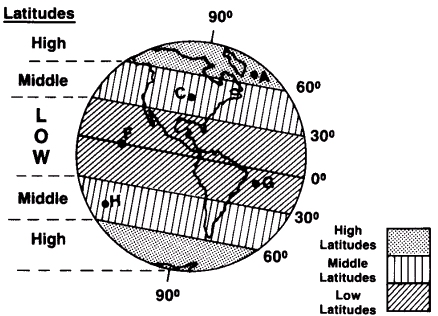
So where in the world are there more people in a population living with schizophrenia? The answer comes from a research team who has written multiple papers on the different environmental risk factors for schizophrenia. The study took data from 162 research projects and looked at the incidence and prevalence of schizophrenia within low (equator to 30 degrees), medium (30 to 60 degrees), and high (above 60 degrees) latitudes. While there was little variation found between these latitude ranges for females, there was a significant increase of incidence and prevalence of schizophrenia for males the higher the latitude.
 There have been studies that show people with schizophrenia tend to be born during the winter/spring months. There are also theories that say there could be a correlation between the amount of vitamin D a pregnant women has during the pregnancy of a fetus who then goes on to develop schizophrenia. This study on latitude supports both. The fact that more males have schizophrenia at higher latitudes could be indicative of lower levels of vitamin D for pregnant woman where there is less direct sunlight, especially during the winter months when the days are shorter.
So much research has been done, but there is still so much more research left to do!
 There have been studies that show people with schizophrenia tend to be born during the winter/spring months. There are also theories that say there could be a correlation between the amount of vitamin D a pregnant women has during the pregnancy of a fetus who then goes on to develop schizophrenia. This study on latitude supports both. The fact that more males have schizophrenia at higher latitudes could be indicative of lower levels of vitamin D for pregnant woman where there is less direct sunlight, especially during the winter months when the days are shorter.
So much research has been done, but there is still so much more research left to do!
1: Incidence and prevalence. (n.d.). Retrieved January 15, 2015, from http://www.advancedrenaleducation.com/generaltopics/basicstatistics/incidenceandprevalence/tabid/520/default.aspx
2: Stuart, G. (2013). Chapter 20: Neurobiological Responses and Schizophrenia and Psychotic Disorders. In Principles and practice of psychiatric nursing (10th ed., pp. 344-375). Maryland Heights, Mo.: Elsevier Saunders.
3: Saha, S., Chant, D. C., Welham, J. L., & McGrath, J. J. (2006). The incidence and prevalence of schizophrenia varies with latitude. Acta Psychiatrica Scandinavica,114(1), 36-39. doi:10.1111/j.1600-0447.2005.00742.x
4: Sørensen, H. J., Pedersen, C. B., Nordentoft, M., Mortensen, P. B., Ehrenstein, V., & Petersen, L. (2014). Effects of paternal age and offspring cognitive ability in early adulthood on the risk of schizophrenia and related disorders. Schizophrenia Research, 160(1-3), 131-135. doi:10.1016/j.schres.2014.09.035
Photo: Latitudes. (n.d.). Retrieved January 15, 2015, from http://alexmorgan.com/lats.jpg

No comments:
Post a Comment