Sunday, January 25, 2015

Pathophysiology

Genetics, the environment, and drugs...oh my!

As was previously discussed last week, there are several factors that when converged in the perfect storm can result in a diagnosis of schizophrenia. Genetics plays a crucial role, and even though it is not fully understood which genes are responsible for schizophrenia, we know having a direct relative with schizophrenia is the biggest risk factor for someone becoming diagnosed with the disease. We know the environment of the pregnant mother can play a role on the fetus developing schizophrenia later on, and we also know drugs, such as amphetamines, cocaine, and marijuana, can also induce psychosis.1 But what is happening in the brain that causes this psychosis? What makes the brain of a person with schizophrenia different from the brain of someone without the disease? As with the genes responsible for schizophrenia, there is a lot of research currently going on to answer these questions.

What research has found is that people with schizophrenia tend to have problems with certain neurotransmitters. This research has led to the dysregulation hypothesis, which says that the psychotic symptoms involved with schizophrenia are the result of impairment or malfunction of neurotransmitters.2 One of these neurotransmitters is dopamine. Dopamine is a neurohormone, or neurotransmitter, that is often referred to in layman's terms as a "feel good" hormone. When there is too much dopamine in the brain, a person will often suffer from psychotic symptoms such as hallucinations or delusions. This is why certain illicit drugs induce psychosis, because they increase the amount of dopamine in the brain in the extracellular space. 
Another neurotransmitter that when malfunctioning can lead to schizophrenia is glutamate and its reciprocal NMDA receptor.3 It is hypothesized that the impaired binding of glutamate to the NMDA receptor can then lead to the increased levels of dopamine later on.4 This is better explained by Dr. Shitij Kapur from King's College in London: 


References:


1: NAMI - The National Alliance on Mental Illness. (n.d.). Retrieved January 23, 2015, from http://www.nami.org/Content/NavigationMenu/Mental_Illnesses/Schizophrenia9/Causes.htm

2: Stuart, G. (2013). Chapter 20: Neurobiological Responses and Schizophrenia and Psychotic Disorders. In Principles and practice of psychiatric nursing (10th ed., pp. 344-375). Maryland Heights, Mo.: Elsevier Saunders.

3: de Bartolomeis, A., Iasevoli, F., Tomasetti, C., & Buonaguro, E. F. (2014). Micrornas in schizophrenia: Implications for synaptic plasticity and dopamine–glutamate interaction at the postsynaptic density. New avenues for antipsychotic treatment under a theranostic perspective. Molecular Neurobiology, doi:10.1007/s12035-014-8962-8


4/Movie: Roche. (2013, October 2). The Biology Behind Schizophrenia [Video file]. Retrieved from https://www.youtube.com/watch?v=V1kSIfxBVfU

Saturday, January 17, 2015

Epidemiology

Who is affected?

When studying the epidemiology of a disease, many factors are weighed to determine what kinds of people have this disease, where they live, what lifestyle habits they have, etc. With schizophrenia a lot of these risk factors are still being researched, and it is still not one hundred percent clear as to what specific kind of person is most likely to be diagnosed with schizophrenia.

Important terms to know - and understand the difference between the two - when discussing epidemiology are incidence and prevalence. Incidence, by research standards, is defined as the rate of new cases for a disease within a given time per a given amount of the population. Because schizophrenia is not as common as other certain medical problems, the incidence of schizophrenia tends to be reported per 100,000 or 10,000 people. Prevalence, on the other hand, is defined as the number of people currently living with the disease in a given population.1

What the research is showing and what we are learning is that schizophrenia is a combination of both genetic and environmental factors that contribute to a person having this disease. Based on what is known, "the most significant risk factor for developing schizophrenia is having a first-degree relative with schizophrenia."2 Currently there are many active research studies working to identify which genes contribute to a person having schizophrenia, and the website www.szgene.org is a database specifically for all of the research being done around this. It is a great resource for past and current work and is constantly updated with the latest findings on the genetic components of schizophrenia. Along with having a "first-degree relative" who has/had schizophrenia, it has been found that the majority of people diagnosed with schizophrenia are male;3 there is a risk between an older paternal age at conception and a child's increased risk for having schizophrenia;4 and there is even an increased risk based on where you live in the world.3

Where are people affected?3

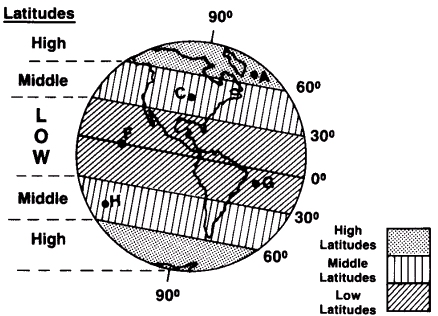
So where in the world are there more people in a population living with schizophrenia? The answer comes from a research team who has written multiple papers on the different environmental risk factors for schizophrenia. The study took data from 162 research projects and looked at the incidence and prevalence of schizophrenia within low (equator to 30 degrees), medium (30 to 60 degrees), and high (above 60 degrees) latitudes. While there was little variation found between these latitude ranges for females, there was a significant increase of incidence and prevalence of schizophrenia for males the higher the latitude.

There have been studies that show people with schizophrenia tend to be born during the winter/spring months. There are also theories that say there could be a correlation between the amount of vitamin D a pregnant women has during the pregnancy of a fetus who then goes on to develop schizophrenia. This study on latitude supports both. The fact that more males have schizophrenia at higher latitudes could be indicative of lower levels of vitamin D for pregnant woman where there is less direct sunlight, especially during the winter months when the days are shorter.

So much research has been done, but there is still so much more research left to do!


References:

1: Incidence and prevalence. (n.d.). Retrieved January 15, 2015, from http://www.advancedrenaleducation.com/generaltopics/basicstatistics/incidenceandprevalence/tabid/520/default.aspx


2: Stuart, G. (2013). Chapter 20: Neurobiological Responses and Schizophrenia and Psychotic Disorders. In Principles and practice of psychiatric nursing (10th ed., pp. 344-375). Maryland Heights, Mo.: Elsevier Saunders.

3: Saha, S., Chant, D. C., Welham, J. L., & McGrath, J. J. (2006). The incidence and prevalence of schizophrenia varies with latitude. Acta Psychiatrica Scandinavica,114(1), 36-39. doi:10.1111/j.1600-0447.2005.00742.x


4: Sørensen, H. J., Pedersen, C. B., Nordentoft, M., Mortensen, P. B., Ehrenstein, V., & Petersen, L. (2014). Effects of paternal age and offspring cognitive ability in early adulthood on the risk of schizophrenia and related disorders. Schizophrenia Research160(1-3), 131-135. doi:10.1016/j.schres.2014.09.035

Photo: Latitudes. (n.d.). Retrieved January 15, 2015, from http://alexmorgan.com/lats.jpg

Saturday, January 10, 2015

Definition

Cultural Stigmas

When you think of schizophrenia, what comes to mind? That "crazy" person sitting by his/herself on the bus mumbling to no one? Russel Crowe cast as John Nash in A Beautiful Mind? The former Arkham patient Harvey Dent antagonizes for information about the Joker in The Dark Knight? Schizophrenia, and mental illnesses as a whole, have a huge stigma attached to them in our society. People often use the word "crazy" to describe anyone acting out of our cultural norms such as not making eye contact, invading another's "personal space," or having a conversation with some one or some voice that you and I cannot see or hear. The reality is that millions of people around the world suffer from schizophrenia, and other mental illnesses, and for every person it is a learning process of how to deal with and manage symptoms, medication side effects, and psychotic episodes. Unfortunately many do not have the support or ability to access resources for help and are helplessly living in an altered reality seeking quick fixes to handle symptoms such as illicit drugs or alcohol. 

I would like to help relieve schizophrenia, and all mental illnesses, of this stigma. I would like to help others realize that every "crazy" person is his/her own person with an individual story and a difficult illness that he/she has to deal with on a daily basis.

What is schizophrenia?1

The word "schizophrenia" comes from the Greek words schizein (to split) and phren (mind). This is extremely misleading and would cause a person to believe that someone with the illness has a split personality. Schizophrenia is DIFFERENT from multiple personality disorder.* The illness was named as such with the idea that a person experiencing a psychotic episode has a "split" between cognitive and emotional perception.

Schizophrenia falls under the category of psychosis. Simply put, psychosis is when a person experiences an altered sense of reality that others around them do not experience. During a psychotic episode, this person will not realize that those around him/her are not seeing or hearing what he/she is experiencing. A major characteristic of schizophrenia is concrete thinking as opposed to abstract thinking, and it may be difficult for a person suffering from psychotic symptoms to multitask or follow instructions by their intended meaning. Other symptoms of schizophrenia are broken down into two categories, positive and negative, based on how they affect certain characteristics of the person's actions, behavior, and thought processes (symptoms will be discussed in depth later).

I believe that it is extremely important to remember that with schizophrenia, as with all mental illnesses, this is a pathological condition of the human body just as are congestive heart failure, arthritis, and kidney stones. As stated by Gail W. Stuart:

Schizophrenia is a neurodevelopmental brain disorder. No one thing causes schizophrenia. It is the end result of a complex interaction among thousands of genes and many environmental risk factors [...] a complex neurobiological disorder of brain neurotransmitter circuits, neuroanatomical deficits, neuroelectrical abnormalities, and neurocirculatory dysregulation (355).


References:
1: Stuart, G. (2013). Chapter 20: Neurobiological Responses and Schizophrenia and Psychotic Disorders. In Principles and practice of psychiatric nursing (10th ed., pp. 344-375). Maryland Heights, Mo.: Elsevier Saunders.

*Multiple personality disorder is a dissociative disorder where various, distinct personalities occur within one person